
Iznik vs. Other Turkish Ceramics
If every blue floral plate gets called “Iznik,” the labels can become confusing. Here is an easy way to understand the look—without turning your shopping trip into an art-history class.
The easy way to recognize an Iznik-inspired look
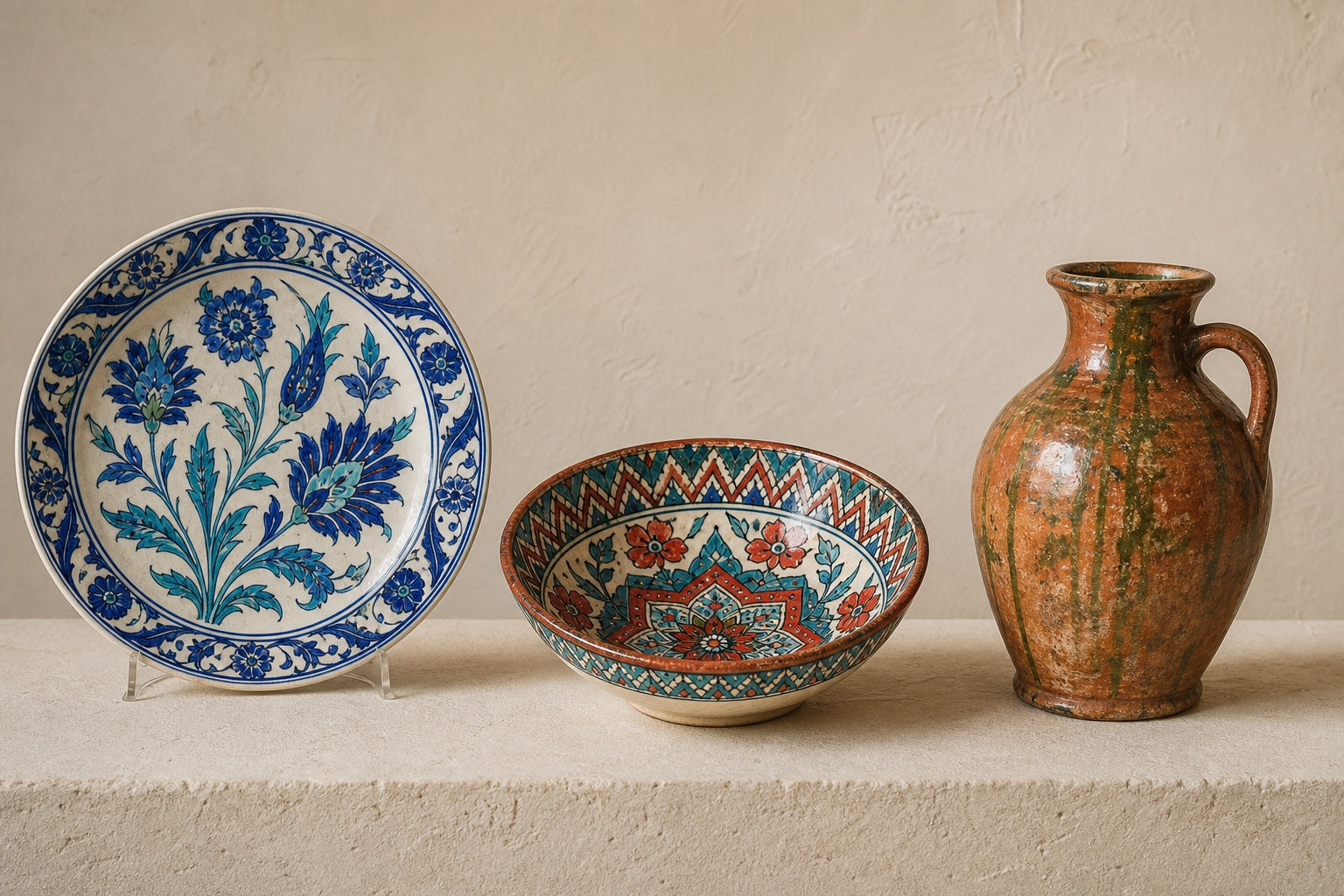
Think of a light background, confident cobalt blue and flowing flowers or leaves. Turquoise, green and coral-red details often join the blue. Tulips, carnations, curved leaves and decorative borders are common parts of the look.
Iznik is also the name of a Turkish town known for a famous ceramic tradition. Many modern pieces borrow that style, even when they are made elsewhere or with different materials.
What does “Iznik-inspired” mean?
It usually means a modern piece uses colors or patterns connected with the Iznik look. It does not automatically mean the object is old, collectible or made in Iznik. For everyday décor, that is perfectly fine—the important thing is that the product description is clear.
Not every Turkish ceramic looks the same
Some pieces are bright and highly detailed. Others use earthy clay, loose brushwork, bold geometric patterns or simple glazes. Different towns, workshops and artists have their own approach, so “Turkish ceramic” describes a much bigger family than one blue-and-white style.
| Feature | Iznik tradition | Other Turkish traditions |
|---|---|---|
| Overall feel | Polished, floral and decorative | Can be rustic, colorful, geometric, simple or modern |
| Common colors | Cobalt blue, white, turquoise, green and coral red | Anything from earthy terracotta to bright multicolor glazes |
| Common patterns | Tulips, carnations, curved leaves and decorative borders | Flowers, geometric shapes, folk patterns, texture or freehand designs |
| Best for | A classic Turkish-inspired focal point | Mixing colors, textures and more casual handmade character |
How to choose a piece
- Choose by visual language: restrained blue-and-white, vivid floral color or earthy glaze.
- Read the origin and material details rather than relying only on the product title.
- Check whether the piece is decorative or approved for food use.
- Expect subtle variation in genuinely hand-painted work.
- If something is sold as antique or collectible, ask for more information before buying.
Explore Turkish-inspired ceramic designs
Shop CeramicsEvery workshop and product is different. Check the individual listing for its origin, materials, care and intended use.