
How Turkish Ceramics Are Made
A hand-painted ceramic plate may look effortless when it is finished, but it passes through many careful steps. Here is the simple version of how a piece goes from plain ceramic to colorful home décor.
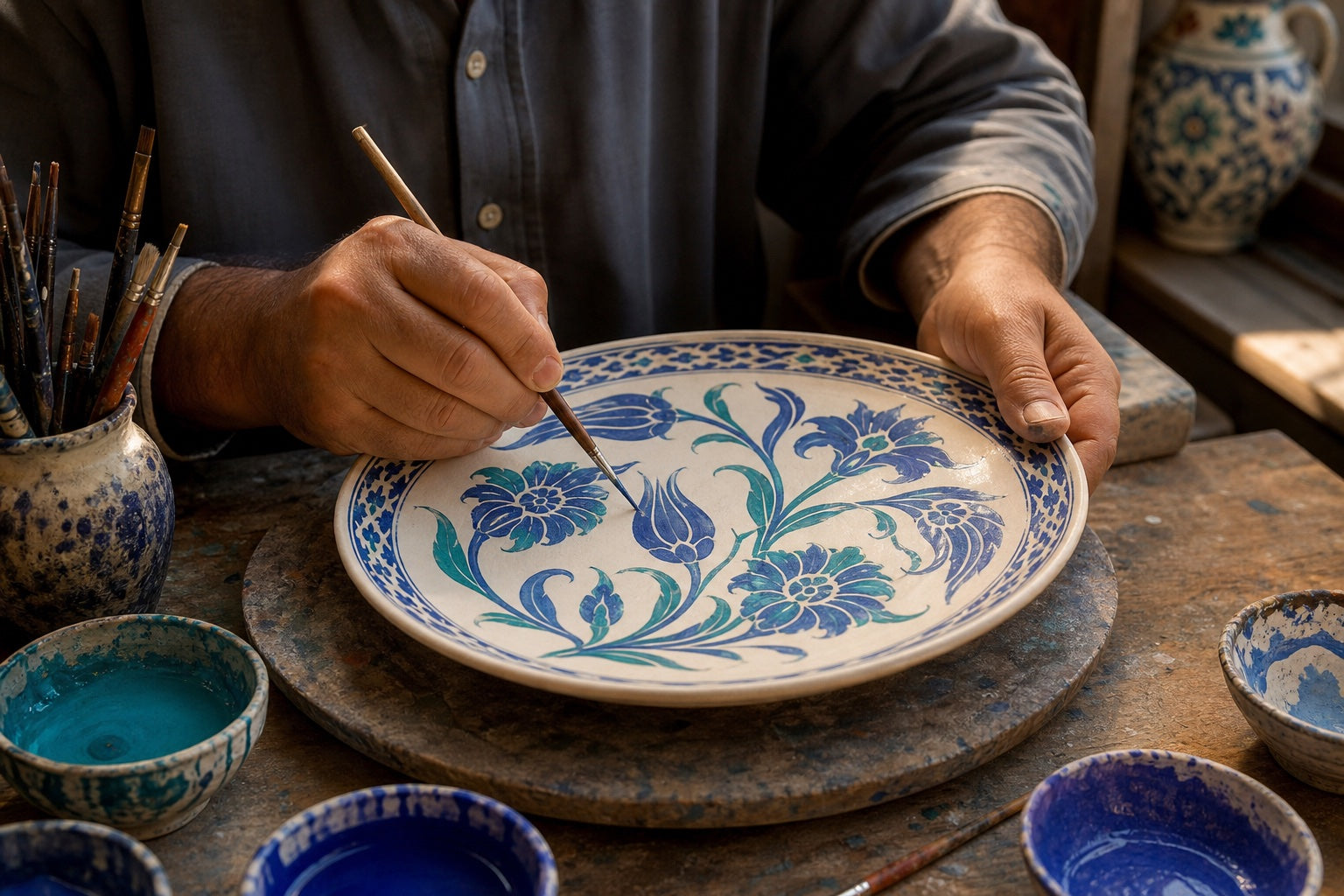
From plain ceramic to finished piece
Shape the piece
The plate, bowl, tile or cup is formed and smoothed. Depending on the workshop, it may be shaped by hand, on a wheel or with a mold.
Let it dry
The piece dries slowly so it can hold its shape. Rushing this stage can lead to cracks or warping.
Give it a first firing
An early trip through the kiln hardens the ceramic and creates a surface that is ready for decoration.
Draw and paint
The design is outlined and filled with ceramic colors. Flowers, leaves and borders are built one brushstroke at a time.
Add the glaze
A clear glaze covers the artwork. It may look cloudy before firing, but the kiln turns it into the smooth, glasslike finish you see on the final piece.
Fire it again
The final firing brings out the color and shine. Once the piece cools, it is checked and cleaned before it is ready to display.
The kiln brings the colors to life
Paint and glaze can look muted before firing. Heat changes them, often making blues deeper, turquoise brighter and the clear glaze glossy. Because every kiln load and brushstroke can behave a little differently, two hand-painted pieces may not be exact twins.
Small differences are part of the charm
- Slight asymmetry in the rim or foot
- Visible brush variation and small differences in repeated motifs
- Minor glaze pooling, pinholes or color variation
- Differences between two pieces from the same design family
Handmade does not mean poorly made. It simply means perfect machine uniformity is not the goal. The small differences are often what make a piece feel special.